Choosing the right domain name is one of the most important decisions when building your online presence. This guide explains the key factors to consider when selecting a domain name, helping you create a memorable brand and avoid common mistakes.
Key Takeaways
- Keep It Simple – Choose a short, memorable, and easy to spell domain name.
- Think Long-Term – Select a domain that can grow with your business.
- Choose The Right TLD – Pick a domain extension that matches your website and audience.
- Protect Your Brand – Check trademarks and secure domain variations.
- Choose a Trusted Registrar – Register your domain with a reliable provider that offers strong security and support.
TABLE OF CONTENTS
- Key Takeaways
- Why Is It Important To choose The Right Domain Name?
- How To Choose The Perfect Domain Name
- Conclusion
The success of your online business starts with your domain name. Get it wrong, and you'll struggle to build a solid brand online and attract the right customers. Conversely, the right domain name can help you gain a competitive advantage, boost your online visibility, and, most importantly, become a valuable business asset.
If you're in the process of building an online business and looking for a perfect name to match, you're in the right place! In this article, we'll discuss the vital tips to help you choose a domain name even if all your current choices are taken. We also included steps to help you register and safeguard your domain name. Ready? Let's get started!
Before we get into the nitty-gritty…
Why Is It Important To choose The Right Domain Name?
As we highlighted above, the right domain name can become a valuable asset to your business. A brandable domain name can help you stand out from your competitors and position your business as an industry leader.
For example, when you want to purchase something online, the first website that (probably) pops into your mind is Amazon. The same applies to marketing solutions, as HubSpot is often considered a trusted resource.
These names are not particularly related to the (e-commerce & marketing) industry, but their brandability and simplicity have established a strong connection with their audiences. This is something you'd want for your online business, too.
Other perks of choosing the right domain name are:
- It saves you from paying an enormous amount of money for an exact match in the future when your business is already a household name. For example, sumome.com had to pay $1.5 million to acquire the sumo.com domain when people kept mistyping their initial domain name.
- It makes it easy for visitors to find you online and send emails whenever needed. For example, a domain name like hotels.com is short and easy to recall.
- It helps you carve a niche for your brand in a crowded industry. For example, our domain name, Trustname, was derived from Trusted domain names, which shows our commitment to providing secure domain names to users.
- It is a great way to secure your brand. Think of your domain name as your brand's fingerprint online. Once you've registered it, no other person can have it except you leave it to expire beyond the redemption period.
Now that you know why you need to choose the right domain name for your website, it's time to find out 'HOW' to pick one:
How To Choose The Perfect Domain Name
Here are some tips to help you choose the perfect domain name for your website:
- Keep It Short And Simple (K.I.S.S)
The longest domain name is llanfairpwllgwyngyllgogerychwyrndrobwllllantysiliogogogoch.co.uk. You probably skipped it, right? That's what happens when you choose a lengthy and cumbersome domain name.
Modern users love convenience. And even though Google pointed out that the length of your domain name has no direct effect on website performance, it still influences how users perceive your brand.
As you can see in the initial example above, long domain names look harder to recall. Users who found your site on a search once might forget how to spell your domain name on their next visit. And this can affect your overall conversion rates.
On the other hand, short domain names are either taken or listed as premium domains – which means they come at a higher price. To avoid this, ensure your domain name is brandable and unique.
This can be a combination of your first and last names, e.g., louisvuiton.com, or your unique selling point, e.g., trustname.com. Whatever you choose, remember to keep it short and simple.
[+] [Notice] Info Insert title here [+] [Notice] Title -> A general rule of thumb is to choose a domain length between 5 and 63 characters.
- Ensure It Passes The Radio Test
Another thing to consider is the memorability of your domain name. This is where the radio test comes in a test that checks if your domain is easy to spell, pronounce, and recall without needing help or clarification.
For example, the domain name buyautoinsuranceonlinenow.com looks ambiguous & lengthy, and users are more likely to misspell it when typing it into their web browsers.
A shorter, simpler alternative name like autocover.com passes the domain test easily without distorting the brand message.
Listed below are some telltale signs that your domain name failed the radio test:
[+] [List] Green Unordered - Adding numbers to your domain. E.g., 12logs.com sounds like twelvelogs.com
- Homophones. E.g., cgames.com sounds like seegames.com and seagames.com
- Using abbreviations. E.g., crossforyou.com and crossforu.com
- Unconventional spellings. E.g., kwikservice.com sounds like quickservice.com
How Do You Check If Your Domain Passes The Radio Test?[+] [List] Green Unordered - Avoid using any of the options highlighted above.
- Run a quick analysis yourself! Can you spell your domain name easily if you're just hearing or seeing it for the first time? If not, then it won't be easy for others.
- Share domain ideas with friends or relatives on the phone and ask them to spell them. If they stutter along the line or misspell, it's a clear sign that you need a new domain name.
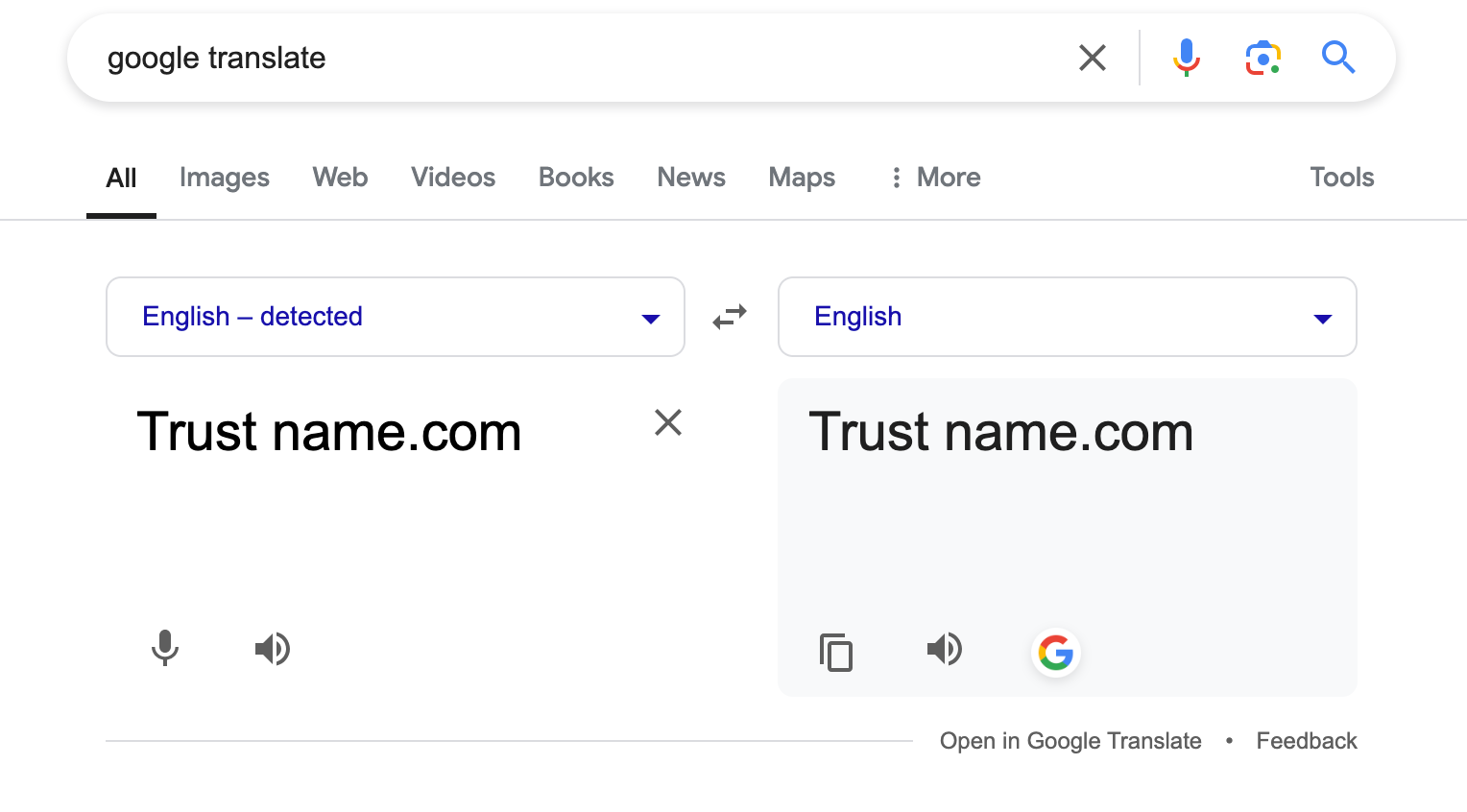
[+] [Notice] Info Insert title here [+] [Notice] Title -> Use voice assistants on your notepad to dictate your domain and see how accurately they can transcribe it. Or use speech to text sites like Google Translate.
- Avoid Using Special Characters Or Double Letters
[+] [Callout] Warning Insert title here [+] [Callout] Title/Title with Icon -> For simplicity, avoid adding special characters like dashes, hyphens, or special symbols to your domain name. While it may be tempting to consider these options when your actual domain name is taken, the cons often outweigh the pros in the long run.
Domain names with special characters look complex and are often difficult to spell. When first-time visitors come across your website in a search result, they may perceive it as a spam site and opt for a competitor instead.
The same applies to using double letters. While these may not affect your click through rate, they're not memorable, and users are more likely to omit a letter when searching for you online. Cybersquatters may even take advantage of this and buy the single letter variant of your domain to redirect users to a spam site.
What To Do: Steer clear of domain names with special characters or double letters. Remember, the goal isn't solely to focus on the benefits of the domain name to your brand but also on how easy it is for your (potential) customers to find you online.
- Your Domain Name Should Be Scalable And Flexible
Always think long-term when choosing a domain name for your website.
Using a niche-focused domain has its advantages (in terms of SEO), but it's best not to limit your brand, especially if you plan to expand in the future.
In this case, ask yourself: will my chosen domain name represent my brand if I diversify my service offerings or target new markets? You don't want to choose a domain name that requires re-branding from scratch when any of these happen.
Example: Instead of jamesphotography.com, a scalable option would be jamesmedia.com or james. media, as this allows you to expand into other photography-related areas in the future.
- Consider Keyword-rich Domain Names
If your chosen domain name has already been taken, consider adding a niche keyword. For example, instead of jamesmedia.com, you could try jamesweddingmedia.com.
This targets a specific niche while keeping the core of your brand intact. There's a caveat, though. Adding niche keywords to your domain name comes with its own pros and cons.
Keyword-rich domains can help you rank for keyword-related searches. Also, it quickly communicates the essence of your brand when users see it in search. On the flip side, it limits your brand's scalability if you decide to expand your service offerings in the future. Checkpoint 4.
- Choose Your TLD Extension
The top-level domain, or TLD, is the suffix that comes after the final dot of your domain name. It is the highest level of a domain and is used to indicate the category of your website.
Google's John Mueller shared that TLD has no direct impact on your website rankings; however, it can affect how users perceive your brand. Here's why.
Some top-level domains seem more trustworthy than others, such as the .com and .org TLDs. When you use these TLDs, users are more likely to click on your website in the search results.
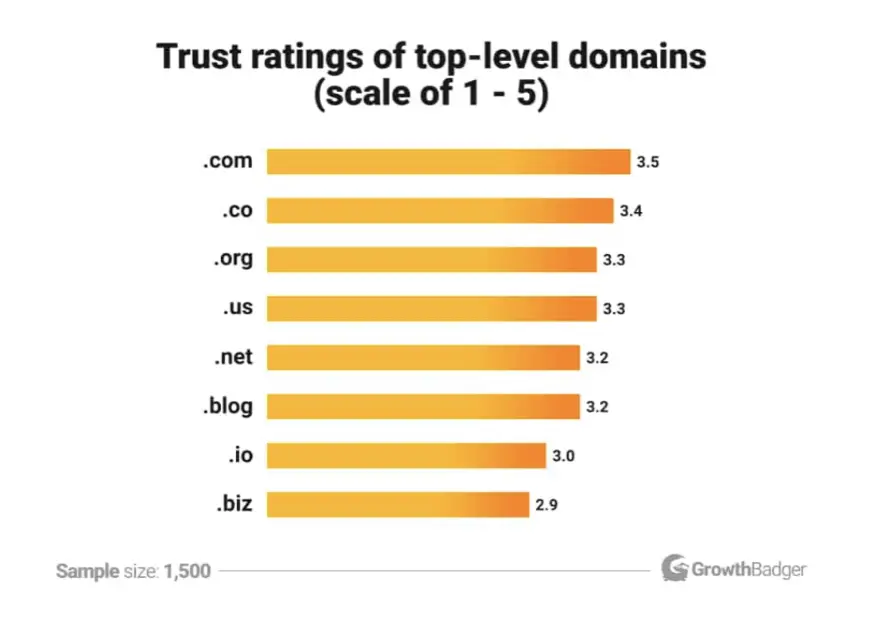
There are different types of TLDs, but .com (commercial) is the most popular. In fact, it is the first thing users think of when typing your domain on search engines. This is why .com domains are more expensive, and if you're lucky enough to get your domain in this TLD, you should register it immediately before someone else.
But what happens if the .com domain is already taken?
No worries! There are still other popular and unique TLDs to consider for your domain. Here are a few:
[+] [List] Green Unordered - .org – perfect for non-profit organizations
- .net – perfect for network-related websites
- .co – the perfect alternative to .com
- .io – perfect for tech companies
- .blog – perfect for bloggers
- .me – perfect for personal or portfolio websites
[+] [Notice] Info Insert title here [+] [Notice] Title -> If you're in a niche-centered industry, you can get creative using your niche keyword for your TLD, e.g., .tech for tech companies and .marketing if you're in the marketing industry.
Another option is opting for ccTLDs, also called country code TLDs. As the name suggests, these are TLDs for countries, and it's best to use them when you're targeting a particular country. Examples are .us (for the United States), .eu (for Europe), etc.
- Do Your Own Research On The Domain
After passing all the checks above, you still need to do your due diligence and research the domain name. This is because domain names can either be new or expired. Don't fret. We'll explain how.
New domain names are those that haven't been registered before. Expired domains, on the other hand, once had an owner who probably forgot to renew or wanted to resell for profit.
Unless you're opting for a new domain, run a thorough check on its history before purchasing it. The last thing you want is to buy a domain previously hosted on an unethical/illegal website.
Luckily, tools like Wayback Machine and Whoxy help you view archived versions of websites hosted on the domain. You can also use them to check out the type of content shared on the website.
- Check For Trademarks
You also need to ascertain that your domain name is unique and doesn't already exist online.
[+] [Callout] Warning Insert title here [+] [Callout] Title/Title with Icon -> Registering an already trademarked domain name can lead to legal complications, as the actual owner can sue you for domain theft or trademark infringement.
This can damage your brand's reputation, and you may need to pay a (whopping) amount of money to settle the case. So, even if your chosen domain is available for sale on the domain marketplace, run a quick check to verify that it's not already trademarked.Here's How.
Type your domain name on Google (and social media) or other search engines to see if there's anything related. If you're based in the US, run your search on the United States Patent and Trademark Office (USPTO) website for verification. You can also hire a trademark attorney on Upwork or UpCounsel to run the checks for you.
- Protect Your Domain Name
Suppose your domain name hits all the checks above, great! But there's still a final step to ensure your domain name is secured: purchasing variations of your domain.
This helps you attract customers trying to find you online when they mistype your primary domain name. Also, it prevents cybersquatters from acquiring these domains for malicious purposes.
Best Cases To Do This:
[+] [List] Green Unordered - Your domain has double letters, like google.com
- You intend to expand to other localities in the future. E.g., google.ca (for Canada)
- You'd love to own all variations of your domain name to have more internet real estate
- You want to redirect all typos to your primary domain
The downside is that purchasing multiple variations of your domain name is costly and difficult to manage. You may need to track the domain expiry date.
To Prevent This:
[+] [List] Green Unordered - Stick to 3 - 5 domain variations. This can be a .com, .org, or .net extension of your domain.
- Set a budget for acquiring domain(s) and stick to it.
- Purchase the domain(s) on the same date and from the same provider.
- Turn on auto-renewal for all the domain names.
- Choose a Reputable Domain Registrar
Now, you should have one or a few choices for your website domain name. The next step is to snag it before someone else does. To do this, you need to choose a registrar – a company or someone who sells a domain name.
Run a quick search on Google, and you'll discover hundreds (if not thousands) of registrars on the internet who claim to offer the best value for your money. But a good number of these sites are only after profit!
To help you make the right choice, here are some vital qualities you need to look out for:
[+] [List] Green Unordered - The Registrar Must Be Accredited By ICANN
ICANN stands for Internet Corporation for Assigned Names and Numbers, and it is in charge of regulating the global domain name system.
- Flexible And Fair Domain Transfer Policy
The registrar should make it easy for you to transfer your domain in or out of their platform. If the policies are unclear or restrictive, tick them off your list.
- Competitive Pricing Plans
Some registrars offer cheap (or even free) domain names in the first year to lure you in, only to shoot up the renewal prices. Always look out for the pricing plans to avoid these types of offers. Also, avoid registrars with hidden fees or who are unclear about their renewal fees.
- Domain Security
Your choice of registrar should have robust security features to protect your domain name. These include a domain lock, WHOIS privacy protection, two-factor authentication, DNSSEC, etc. Trustname, for instance, lists all these features for free, including Two-tier domain privacy protection for optimal privacy. You can read about it here.
- Expiration Policy
The registrar should have fair expiration policies that protect your domain even if you fail to renew it. In this case, opt for registrars with an auto-renewal option, send timely emails, and have a grace period so you don't lose your domain to someone else.
- Quality Support
This is one of the most important things you need to look out for. Your choice of registrar should offer reliable support channels to meet your needs.
- Easy To Use
After purchasing your domain, you should also enjoy managing it. That said, choose a registrar with an intuitive interface and basic domain management features, like DNS setup, email forwarding, domain transfer, etc., out of the box.
- The Registrar Must Be Accredited By ICANN
Check review platforms like TrustPilot and social media to know what other people say about their services. You'll see a few bad reviews, as expected, but don't be discouraged. It's completely normal. However, the good ratings must outweigh the bad.
Conclusion
Choosing a perfect domain for your website is only the first step to your online success. With the tips outlined above, you're right on track to secure a domain name that will represent your brand and become a valued asset in the future. Remember, your domain is the foundation of your digital identity, so it's vital that you choose wisely.
Once you have locked in the perfect domain name for your business, opt for a customer-centric registrar like TrustName. We offer brandable domain names at an affordable price and with premium management features out-of-the-box.
Was this article helpful?
That’s Great!
Thank you for your feedback
Sorry! We couldn't be helpful
Thank you for your feedback
Feedback sent
We appreciate your effort and will try to fix the article