Choosing the right SSL certificate is crucial for establishing online trust, securing user data, and boosting your website's search engine credibility. While every SSL certificate provides essential data encryption, the level of identity verification varies significantly across validation tiers.
This comprehensive guide breaks down the key differences between Domain Validation (DV), Organization Validation (OV), and Extended Validation (EV) SSL certificates to help you select the ideal option for your business.
Key Takeaways
- Validation Levels – DV validates domain control only OV verifies business legitimacy EV provides the highest level of corporate background vetting.
- Issuance Time – DV certificates are issued in minutes, OV certificates take 1 to 3 business days and EV certificates take up to 10 business days.
- Target Audience – DV is ideal for blogs, personal sites, and small businesses OV and EV are designed for registered businesses, Ecommerce platforms, and enterprise organizations.
- SEO & Trust Impact – All SSL certificates enable HTTPS and encrypt data, but OV and EV certificates provide visible organizational credentials in web browsers to maximize visitor trust.
TABLE OF CONTENTS
- Key Takeaways
- What Are SSL Certificates and How Do They Work?
- Why Should You Have an SSL Certificate on Your Domain?
- Types of SSL Certificates - Based on Validation
- Why the Extra Validations with OV and EV SSL Certificates?
- How to Choose Between DV, OV, and EV Certificates
- Other Factors to Consider to Help You Choose
- Ready to Purchase Your SSL Certificate? Use Trustname
Domain validation (DV), organization validation (OV), and extended validation (EV) are the three classifications of SSL certificates based on the extent of validation required before issuance. If you are wondering which option to choose among DV, OV, and EV SSL certificates, this guide is for you.
DV SSL certificates are super quick to set up, requiring you to show only that you have control over the domain. In contrast, OV and EV SSL certificates require much more extensive verifications, including your business name, address, phone numbers, domain history and legal status.
Today, SSL certificates do more than just encrypt website communications. An SSL certificate places a seal of trust on any website and forms a major part of online credibility. To ensure legitimate companies are endorsed by certificate authorities, these validation processes help filter out malicious or suspicious sites.
In the rest of this piece, we'll discuss how SSL certificates work, what DV, OV, and EV SSL certificates are, how they differ from one another, and how to decide on the best option for your needs. We'll then show you how Trustname makes it effortless to purchase any of these three validation tier SSL certificates. But first
What Are SSL Certificates and How Do They Work?
An SSL certificate is a digital file installed on the web server of a website. It contains the necessary credentials to establish an encrypted connection between the website's server and any visitor's browser.
Having an SSL certificate installed on your website is now a standard security practice. Without one, any communication between your website and a visitor's browser is at risk of being intercepted.
If a hacker breaks into your connection channel, they can view sensitive transferred data, including customer details and internal company information.
However, with an SSL certificate installed, all data transferred between your website and the visitor's browser is encrypted. It can only be decoded using cryptographic keys that only the two parties access ensuring a secure channel where no one can eavesdrop on your data.
Modern web browsers flag websites without SSL certificates as "Not Secure" which can immediately intimidate visitors and increase your bounce rate.
Why Should You Have an SSL Certificate on Your Domain?
If we had to give just one answer, it would be privacy. You want your customers to know their data is safe with you. You wouldn't want hackers having a field day on your website and destroying the solid reputation you’ve dedicated countless hours and resources to building.
An SSL certificate provides that essential protection and much more.
- Protects Your Data
If you sell products online, chances are you’ll be collecting sensitive customer data, such as credit card information, billing addresses, and email addresses. With an SSL certificate installed, you create a secure channel for customers to submit their data without the threat of scammers gaining unauthorized access.
- Maximizes Your Website Traffic
Search engines like Google rank websites without SSL certificates lower in search results. Furthermore, most popular browsers explicitly warn users away from unencrypted sites.
By keeping an active SSL certificate on your domain, you ensure that you aren't undermining your online marketing efforts or losing potential customers who are deterred by security warnings, thereby maximizing your traffic.
- Portrays Brand Credibility
Domain names are more than just web addresses they are a core part of your brand and the primary entry point to your online presence. If search engines and browsers inform visitors that your domain name cannot be trusted because you lack an SSL certificate, your business credibility can take a hit.
Customers want to know that they can trust you with their data, and an SSL certificate is a fundamental requirement for online privacy.
Types Of SSL Certificates - Based On Validation
Now to the main event DV, OV, and EV SSL certificates how do they differ?
SSL certificates are categorized by the extent of verification required by the Certificate Authority (CA) prior to issuance.
- Domain Validation (DV) SSL Certificates
Domain Validation (DV) SSL certificates are the most basic type of SSL certificates and the easiest to obtain. They are called "Domain Validation" because to get one, you only need to prove that you own or control the domain name you want to secure.
[+] [List] Green Unordered - Email Verification
The Certificate Authority sends an automated confirmation link to the administrative email address attached to your domain. Clicking this link verifies your request.
- File-Based Verification
The CA provides a specific text file that you upload to your website’s root directory. Once the CA automatically verifies the file's presence, the check is complete.
- DNS CNAME Verification
The CA requires you to add a specific CNAME record containing a unique hash to your domain's DNS settings.
- Email Verification
- Because of these mandatory manual checks, OV SSL certificates take longer to issue than DV SSL certificates
Organization Validation (OV) SSL certificates represent the mid tier category. They take verification steps further. First, you must prove domain ownership (just as with DV SSLs).
Additionally, you must verify that you operate a legally registered business, confirm your physical business address, and validate your business phone number. Most CAs will also perform a final callback verification over the phone.
Because of these mandatory manual checks, OV SSL certificates take longer to issue than DV SSL certificates.
- Extended Validation (EV) SSL Certificates
At the highest tier are Extended Validation (EV) SSL certificates. With an EV SSL certificate, you must undergo several thorough background checks before issuance.
The CA will verify your business status, operational history, perform fraud and blacklist screenings and conduct a verification phone call to ensure the individual requesting the SSL is an authorized decision maker within the company.
EV SSL certificates typically add 7 to 9 additional verification steps beyond OV checks and, as expected, take the longest to process and issue.
Why The Extra Validations With OV and EV SSL Certificates?
It’s simple anyone can purchase and install a DV SSL certificate including malicious bots and phishing websites. Many web hosting providers, including Trustname, even bundle free DV SSL certificates with their hosting plans.
The extra validation steps required for OV and EV certificates help Certificate Authorities ensure they are endorsing legitimate, legally operating companies. When customers visit a site with a premium SSL certificate installed, they know they are entrusting their information to a thoroughly vetted business.
Phishing websites frequently use free DV SSL certificates to display a padlock icon. If your organization processes high value transactions or sensitive user data, relying solely on DV may leave your users vulnerable to brand impersonation.
How To Choose Between DV, OV And EV Certificates
The most convenient way to evaluate the different SSL certificate validation types is a side by side comparison across key considerations.
- Who They Are For
[+] [List] Green Unordered - DV SSL Certificates
Can be used by any website owner whether an individual running a portfolio, a blogger, a small business, or an Ecommerce brand.
- OV & EV SSL Certificates
Designed primarily for registered companies, enterprise organizations, and well known brands that need to reassure users of their organizational legitimacy and mitigate phishing risks.
[+] [Callout] Info Insert title here [+] [Callout] Title/Title with Icon -> A DV certificate provides standard HTTPS encryption. However, if your brand is a frequent target for impersonation or phishing, upgrading to OV or EV is a worthwhile investment.
- DV SSL Certificates
- What They Look Like Installed
DV, OV, and EV SSL certificates all display the classic padlock icon in modern web browsers.
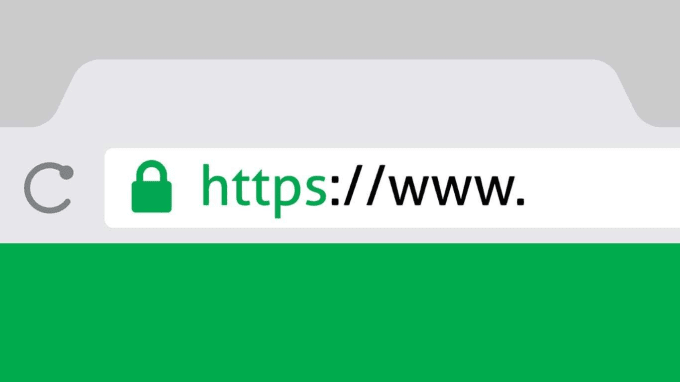
However, for DV certificates, the padlock display is the extent of the indicator. OV and EV SSL certificates provide
site visitors with detailed, validated business information.
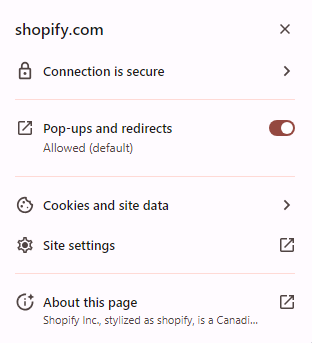
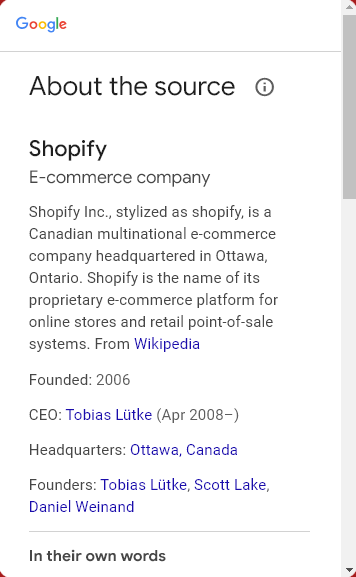
When a user clicks on the padlock icon of a site secured with an OV or EV certificate, the browser displays verified company credentials.
Browsers such as Google Chrome feature detailed organizational profiles under sections like "About this page" providing a corporate snippet that highlights verified business identity details.
- Availability
While anyone can obtain a DV SSL certificate, OV and EV SSL certificates are reserved exclusively for legally registered businesses and organizations.
At Trustname, OV and EV SSL certificates are available only to verified corporate entities, not individuals.
- Level Of Validation
[+] [List] Green Unordered - DV SSL
Domain ownership verification only via online administrative checks.
- OV SSL
Domain ownership verification plus official business registry checks, physical address verification, and phone verification.
- EV SSL
Comprehensive audit including corporate registration records, operational history public phone listing verification, applicant employment verification, domain fraud checks, and blacklist screenings.
At Trustname, all EV SSL certificates are issued by DigiCert one of the world's premier digital security certificate authorities.
- DV SSL
- Verification Time
[+] [List] Green Unordered - DV SSL Certificates
Issued within minutes to under an hour.
- OV SSL Certificates
Typically take 1 to 3 business days following Certificate Signing Request (CSR) submission.
- EV SSL Certificates
Can take up to 10 business days due to exhaustive manual vetting.
- DV SSL Certificates
- Pricing And Warranty
[+] [List] Green Unordered - DV SSL Certificates
These are the cheapest form of protection for your website. When you purchase a web hosting plan on Trustname, you get a single domain DV SSL certificate for free. If you buy your SSL separately, it costs about $2.10 per month or $25 per year, backed by standard warranty coverage.
- OV SSL Certificates
Establishing significantly more credibility than a standard DV SSL certificate, OV certificates start on Trustname at $2.80 per month or $38 per year. They include financial warranties ranging from $10,000 to $250,000 as compensation in the event of a data breach resulting from a certificate flaw.
- EV SSL Certificates
Granting the highest level of protection and credibility, EV certificates start on Trustname at $23 per month or $280 per year. They include a business level HTTPS seal, a $250,000 warranty, and are issued directly by DigiCert.
- DV SSL Certificates
Other Factors To Consider To Help You Choose
Now that you understand the validation tiers, consider the scope and number of domains you need to secure.
- Single Domain SSL Certificates
Protects one specific domain name (Ex - yourdomain.com) and all subdirectories under it.
- Wildcard SSL Certificates
Covers one primary domain and an unlimited number of first level subdomains (Ex - yourdomain.com, blog.yourdomain.com, store.yourdomain.com).
- Multi Domain SSL Certificates
Secures multiple distinct primary domains and subdomains by explicitly listing them as Subject Alternative Names (SANs) in your Certificate Signing Request (CSR).
- Multi Domain Wildcard SSL Certificates
Automatically covers multiple distinct primary domains along with all associated subdomains without needing to specify each subdomain individually.
Ready To Purchase Your SSL Certificate? Use Trustname 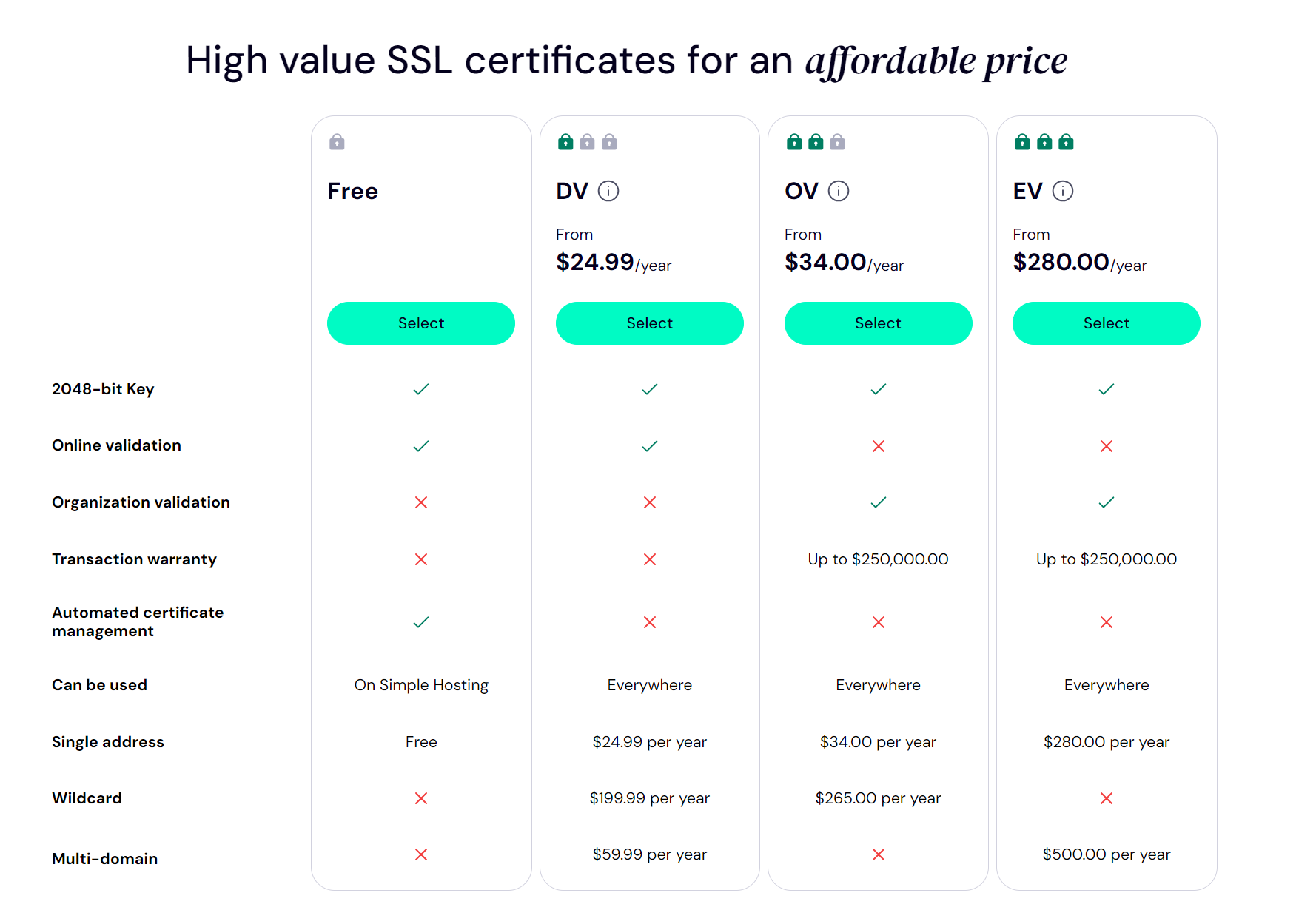
Selecting the right SSL certificate comes down to your organizational structure and business goals.
- If you run a personal blog, portfolio, or hobby site, a DV SSL certificate is a cost effective choice.
- If you run a growing business seeking enhanced trust on a budget, an OV SSL certificate offers a balanced approach.
- If you operate a corporate entity, financial institution, or prominent Ecommerce store requiring maximum consumer confidence, an EV SSL certificate is the optimal choice.
Benefits of SSL Certificates on Trustname
- Industry Standard Security
All Trustname SSL certificates include 256 bit encryption with a 2048 bit signature key, fully recognized by all modern browsers.
- Universal Compatibility
Trusted browser status, including HTTPS formatting and padlock indicators across mobile and desktop.
- Flexible Configurations
Available across Single Domain, Wildcard (DV/OV), and Multi Domain (DV/EV) options.
- Free Bundling
Get a complimentary DV SSL certificate out of the box with any Trustname web hosting plan.
Trustname is committed to protecting your online privacy and website security. We are proud to be the #1 fastest growing domain registrar and SSL provider in 2024!
Was this article helpful?
That’s Great!
Thank you for your feedback
Sorry! We couldn't be helpful
Thank you for your feedback
Feedback sent
We appreciate your effort and will try to fix the article